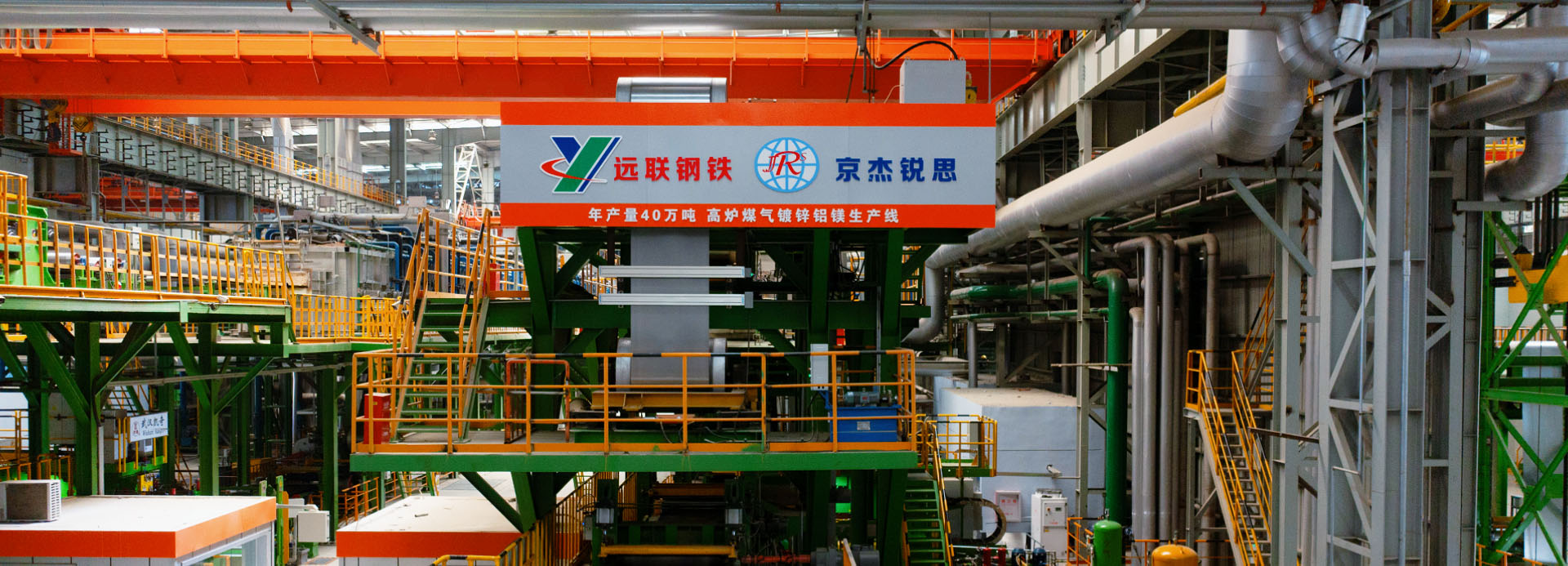
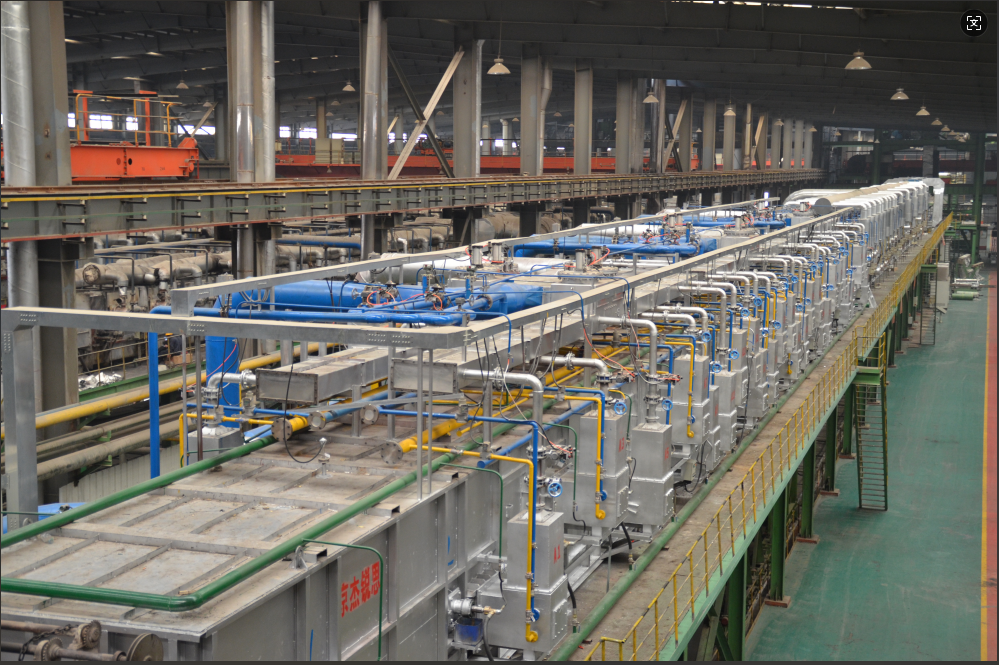
Project Name: 250,000-ton 1250mm Continuous Hot-dip Aluminized Zinc-silicon Coating Line
Client Name: Tianjin Xinyu Color Coated Sheet Co., Ltd.
Project Nature: New Construction Project
Undertaking Method: General Contracting by Jingjie Ruisi
Signing Date: April 24, 2013
Commissioning Status: Under Construction
Operation Status: Good
I. Main Technical Parameters:
1. Raw Materials
Raw Material Status: Cold-rolled low-carbon steel strips without annealing
Steel Grades: Q195, Q235, 08F, 08Al, SPCC, SPCD
Strip Thickness: 0.2~1.2mm
Strip Width: 800~1250mm
Steel Coil Weight: Max 25t
Steel Coil Inner Diameter: Φ508mm/Φ610mm
Steel Coil Outer Diameter: Max Φ2100mm
Implementation Standard for Cold-rolled Strips: GB710-91
Oil Content: Less than 1800mg/m²
Mechanical Properties: Yield Strength: σₛ = max 710N/mm²
2. Finished Products
Strip Thickness: 0.2~1.2mm
Strip Width: 800~1250mm
Steel Coil Weight: Max 25t
Steel Coil Inner Diameter: Φ508mm/Φ610mm
Steel Coil Outer Diameter: Max Φ2100mm
Coating Weight: 30~120g/m² (double-sided aluminized zinc-silicon coating), 50~200g/m² (double-sided galvanizing)
Product Surface Condition: Regular spangle or skin-passed spangle
Coating Protection: Passivation, oiling (reserved)
Implementation Standard: Refer to ASTM A792 and GB2518
Transmission Direction: Right-side transmission
Annual Production Capacity: 250,000t/a (actual production time is calculated as 6950 hours)
II. General Description and Characteristics of Production Process and Technology
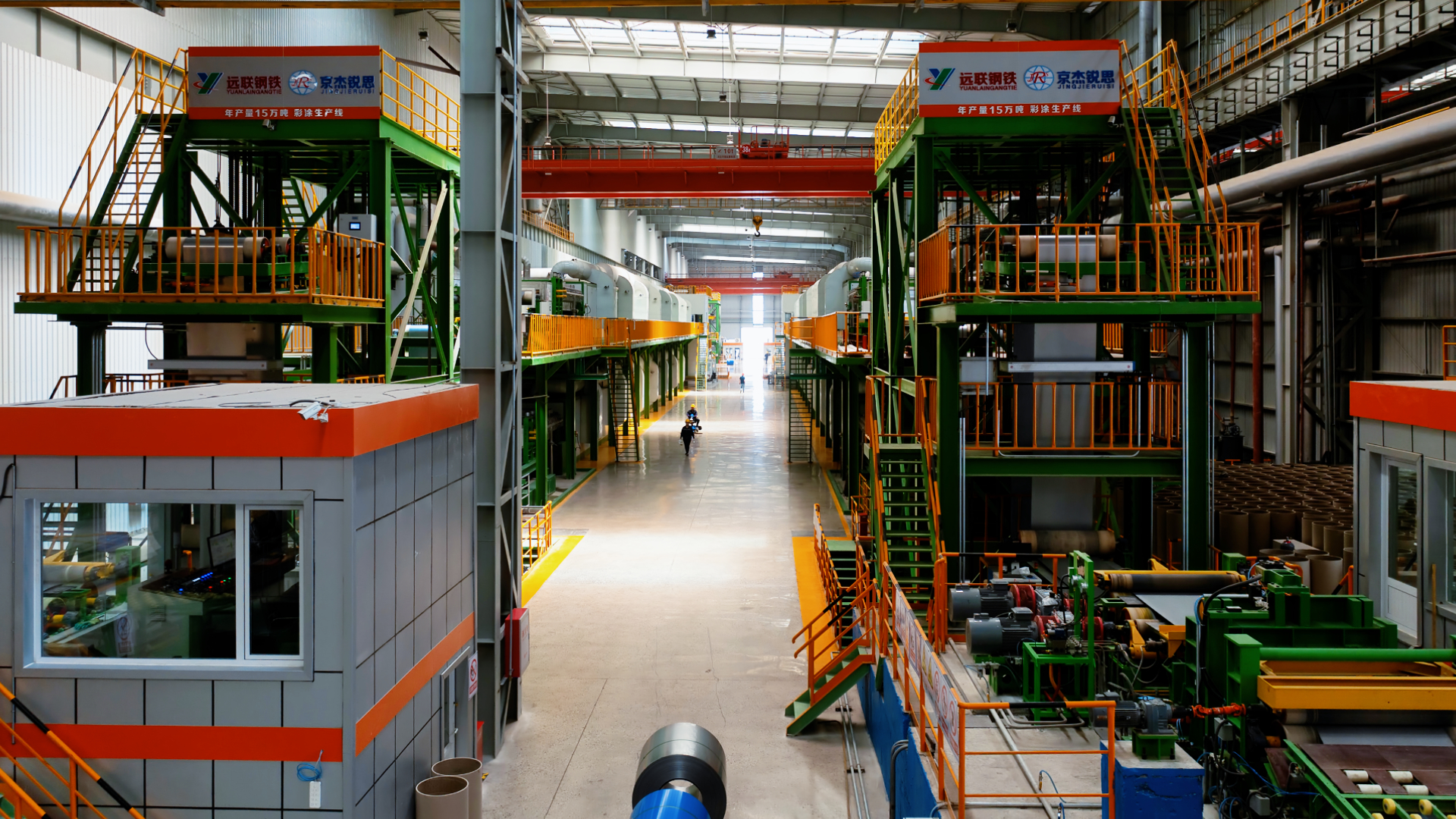
Steel coils from the cold rolling workshop are placed on the transfer trolley by the factory crane, then transported to the entrance of the galvanizing line. The coils are respectively delivered to No.1 or No.2 coil trolleys by crane.
The strapping of the steel coil is cut, and the coil is transported to the expanding mandrel of the uncoiler by the feeding car. The trolley descends and returns to its original position, and the mandrel of the uncoiler expands to hold the coil. The press roll of the uncoiler is pressed down to hold the coil. The mandrel of the uncoiler rotates reversely to place the strip head on top. The uncoiler and its press roll are jogged forward to feed the strip head into the pinch rolls behind the uncoiler. The press roll of the uncoiler is lifted, and the pinch rolls are pressed down. Meanwhile, the uncoiler and pinch rolls are jogged to continue feeding the strip head into the entry shear to cut off the ultra-thick and irregular part of the strip head, then the strip head is fed to the front of the welding machine to wait. The entry section is equipped with two uncoilers, two sets of pinch rolls and two shears. During production, one set of equipment operates normally, while the other is in standby. When the coil on one uncoiler is fully processed, the tail of this coil is welded to the head of the new coil on the other uncoiler. The tail coil and sleeve on the previous uncoiler are unloaded by the coil feeding trolley, moved to the tail coil separation device, which pushes the tail coil to the side, and then the tail coil is lifted away by crane.
The welded strip enters the entry looper through the first group of tension rolls, ensuring a stable speed when entering the degreasing section, which is conducive to stable cleaning in the degreasing section. After exiting the entry looper, the strip enters the degreasing section through the 3# tension roll. It undergoes alkaline spray cleaning, alkaline brush cleaning and electrolytic degreasing to remove surface dirt and grease, then is cleaned by primary water brushing and primary water spray to remove residual alkaline solution on the surface, thus obtaining a clean steel substrate surface. The cleaned strip is dried by hot air, then tensioned by the 4# tension device, passes through the 5# correction roll, enters the 5# tension roll and tension measuring roll, and enters the reduction annealing furnace under centering and constant tension.
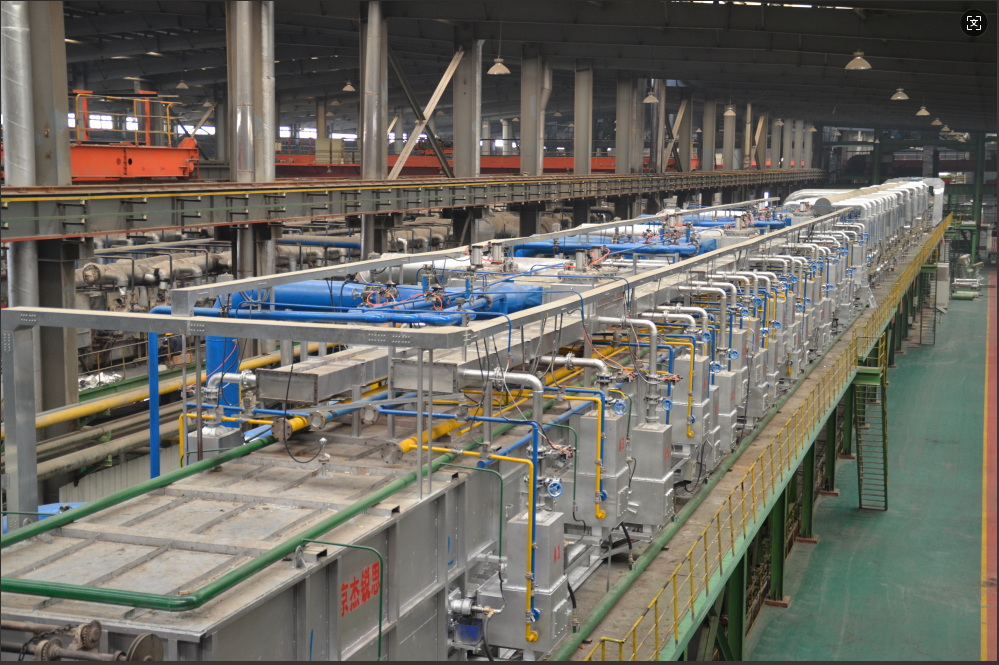
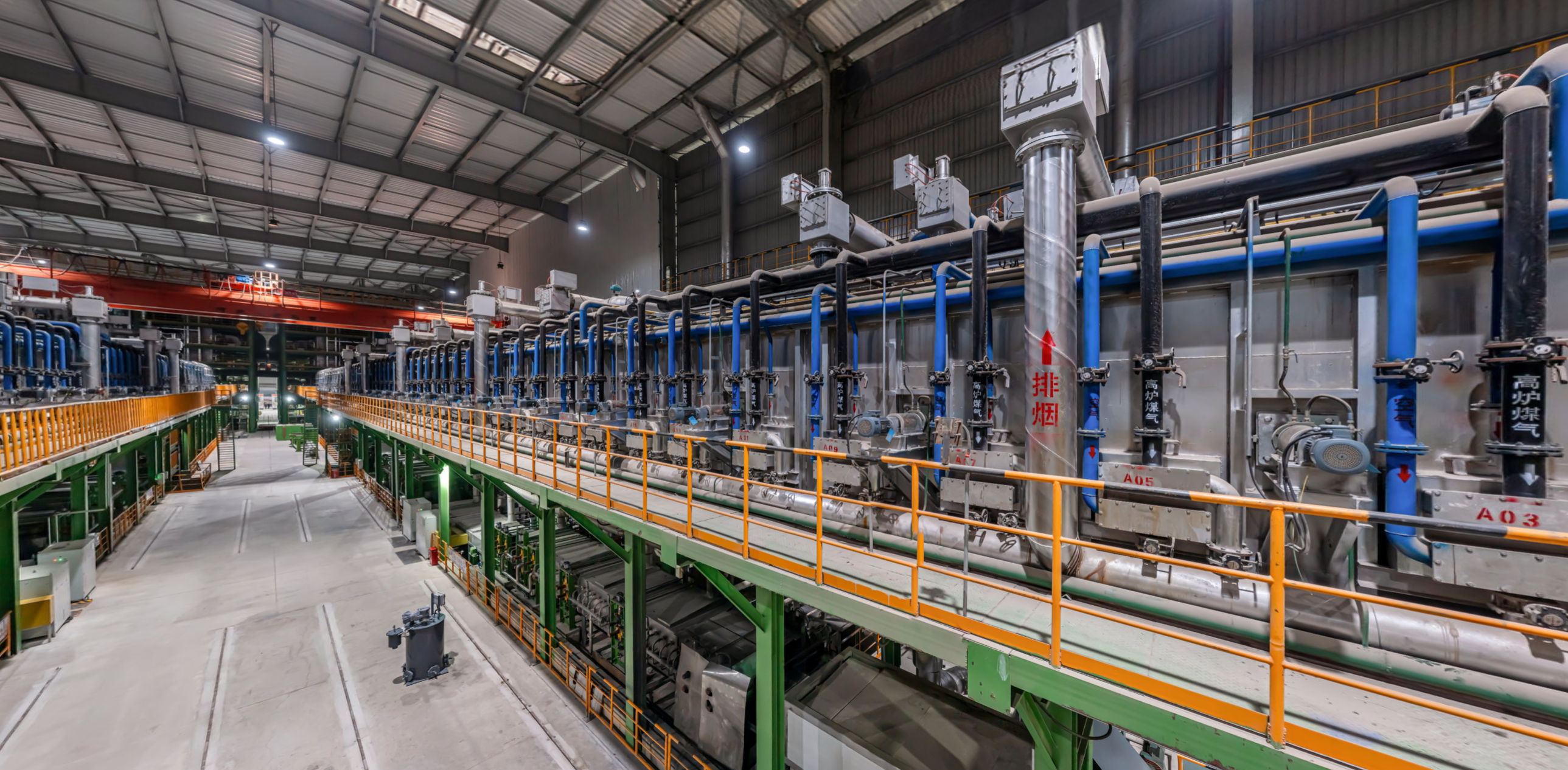
The strip is heated to the annealing temperature in the furnace, and the oxide film on the strip surface is reduced under the action of hydrogen-containing atmosphere in the furnace. Then the strip is rapidly cooled to the temperature required for galvanizing and enters the ceramic pot through the 6# hot tension roll. Hot-dip coating is performed in the pot, then the strip is turned by the sink roll and lifted vertically upward. After the galvanized strip leaves the liquid surface, a pair of air knives on both sides of the strip above the pot scrape off the excess coating liquid on the surface to control the coating thickness.
After exiting the air knives, the strip continues to be lifted upward into the post-coating cooling section to solidify the coating, then is turned to enter the horizontal fan for further cooling, then turned again to move vertically downward into the quenching tank. Before entering the quenching tank, the strip is cooled to below 200℃, and after water cooling in the quenching tank, the strip temperature drops to below 60℃. After drying, it enters the skin-pass and tension leveling area. The strip enters the four-high wet skin pass mill through the 7# and 8# tension roll groups. The main function of the skin pass mill is to improve the mechanical properties of the strip and flatten the spangles. The strip enters the 9# tension roll group and then the tension leveler to improve the flatness through stretch leveling. The tension-leveled strip enters the roll coating passivation treatment through the 10# and 11# tension rolls, using roll coating passivation. After passivation, the steel plate enters the passivation drying device and then the exit looper.
The entry looper and exit looper are set to ensure that the process section can operate normally when the entry and exit sections stop for coil changing during the operation of the line.
The strip exiting the exit looper passes through the 12# tension roll, then enters No.1 and No.2 coilers, and is slit by the shear in front of the coilers for coiling.
The finished coils after slitting are unloaded from the mandrel of the coiler by the uncoiling trolley, manually strapped, lifted away by crane, weighed, packaged and then stored in the warehouse.