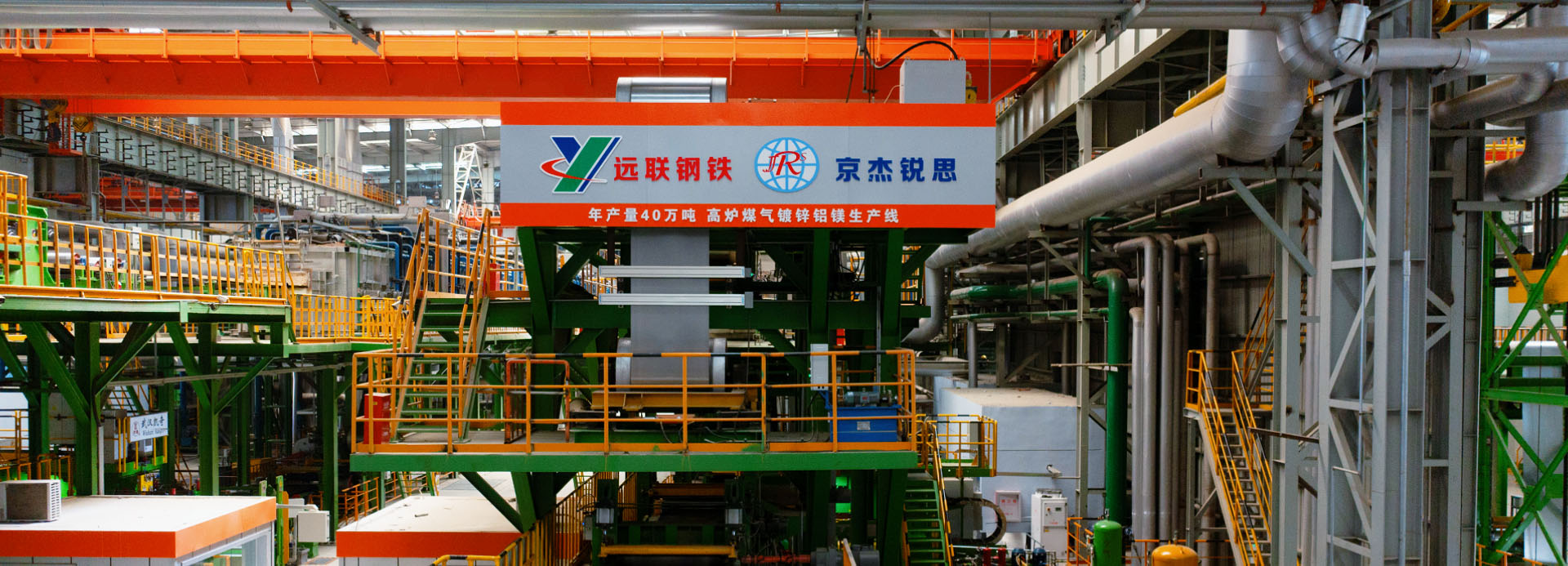
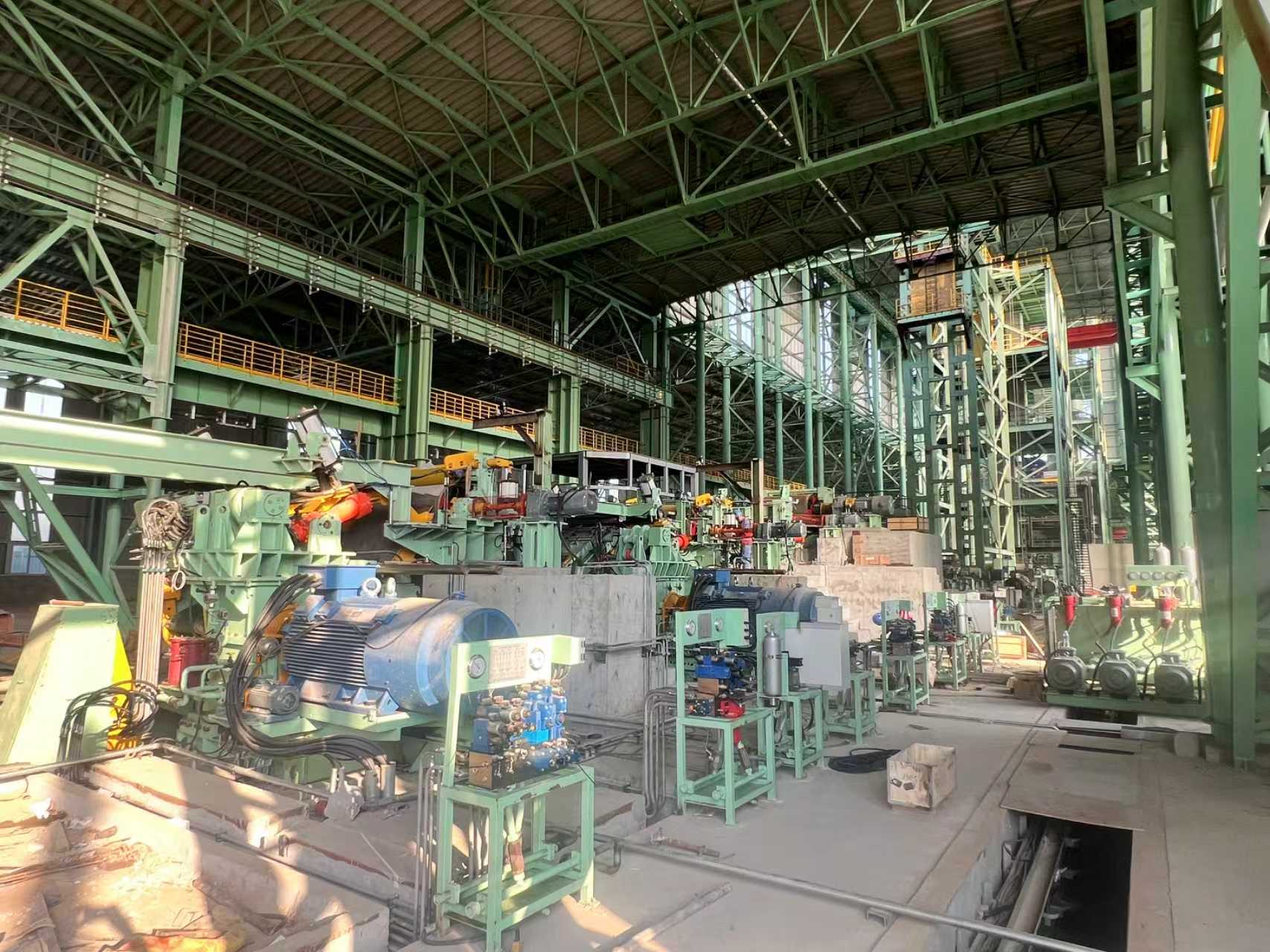
Project Name: 160m/min Hot-dip Galvanizing Line
Client Name: Shandong Dongding Steel Rolling Co., Ltd.
Project Nature: New Construction Project
Undertaking Method: General Contracting by Jingjie Ruisi
Signing Date: May 10, 2012
Commissioning Status: Under Construction
Operation Status: Good
I. Annual Production Capacity
The production capacity of the annealing and reduction furnace is based on 0.35×1000mm at 160m/min. The maximum hourly output of the line is 26t/h, with a total annual working hour of 7200h for the line. The maximum annual production capacity of the line is 200,000 tons.
II. Raw Material and Product Data
### Raw Materials
Raw Material Status: Cold-rolled hard steel coils
Steel Grades: Q195, Q235, SPCC, SPCD
Strip Thickness: 0.15~0.8mm
Strip Width: 800~1250mm
Steel Coil Inner Diameter: φ508mm/φ610mm
Steel Coil Outer Diameter: φ1100mm~φ2100mm
Steel Coil Weight: Max 25t
Mechanical Properties: Yield Strength: бₛ = max 710N/mm²
Finished Products
Strip Thickness: 0.15~0.8mm
Strip Width: 800~1250mm
Steel Coil Inner Diameter: φ508mm/φ610mm
Steel Coil Outer Diameter: Max φ1800mm
Steel Coil Weight: Max 20t
Coating Status
Product Surface Condition: Regular spangle or skin-passed spangle
Coating Weight: 40~200g/m²
Coating Protection: Passivation
Implementation Standard: GB/T2518-2008
III. Brief Description of Production Process Flow
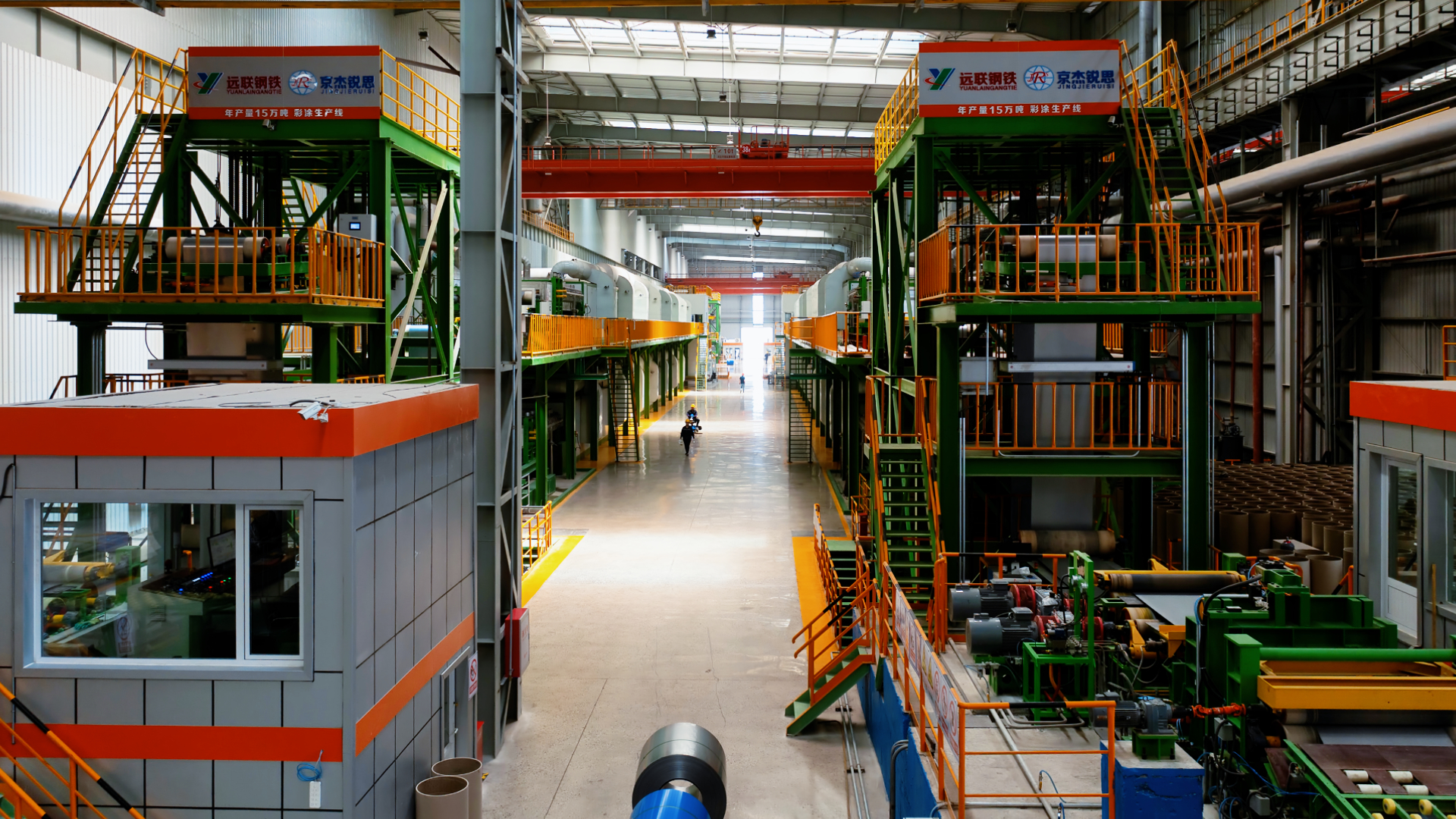
Steel coils from the cold rolling workshop are placed on the transfer trolley by the factory crane, then transported to the entrance of the galvanizing line. The coils are separately delivered to No.1 or No.2 coil trolleys by crane. After cutting the coil strapping, the feeding trolley moves the coil to the expansion mandrel of the uncoiler. The trolley descends and returns to its original position, and the uncoiler mandrel expands to support the coil. The uncoiler press roll is lowered to hold the coil. The uncoiler mandrel rotates reversely to position the strip head upward. The uncoiler and its press roll are jogged forward to feed the strip head into the pinch rolls behind the uncoiler. The uncoiler press roll is lifted, and the pinch rolls are lowered. Meanwhile, the uncoiler and pinch rolls are jogged to continue feeding the strip head into the entry shear to cut off the excessive thickness and irregular parts of the strip head, which then waits in front of the welder.
The entry section is equipped with two uncoilers, two pinch rolls, and two shears. During production, one set of equipment operates normally while the other is on standby. When the coil on one uncoiler is fully processed, the tail of this coil is welded to the head of the new coil on the other uncoiler.
The welded strip enters the entry looper through tension rolls, ensuring a stable speed when entering the degreasing section, which is beneficial for stable cleaning in the degreasing process. After exiting the entry looper, the strip enters the degreasing section via tension rolls, where it undergoes alkaline spray cleaning, alkaline brush cleaning, and electrolytic degreasing to remove surface dirt and grease. It is then subjected to primary water brush cleaning and primary water spray cleaning to remove residual alkaline solution, resulting in a clean steel substrate surface.
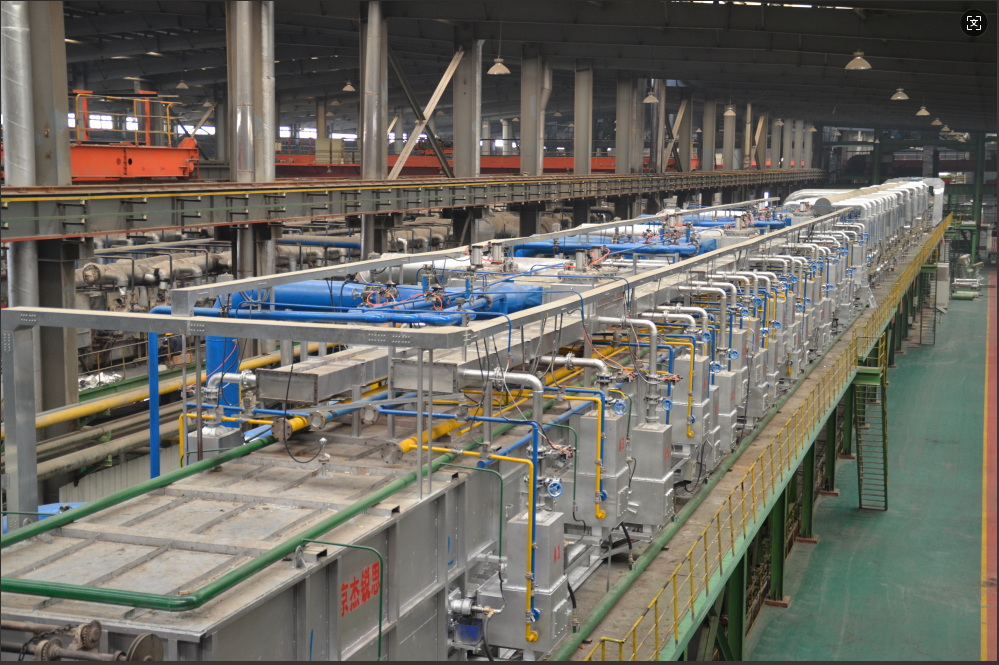
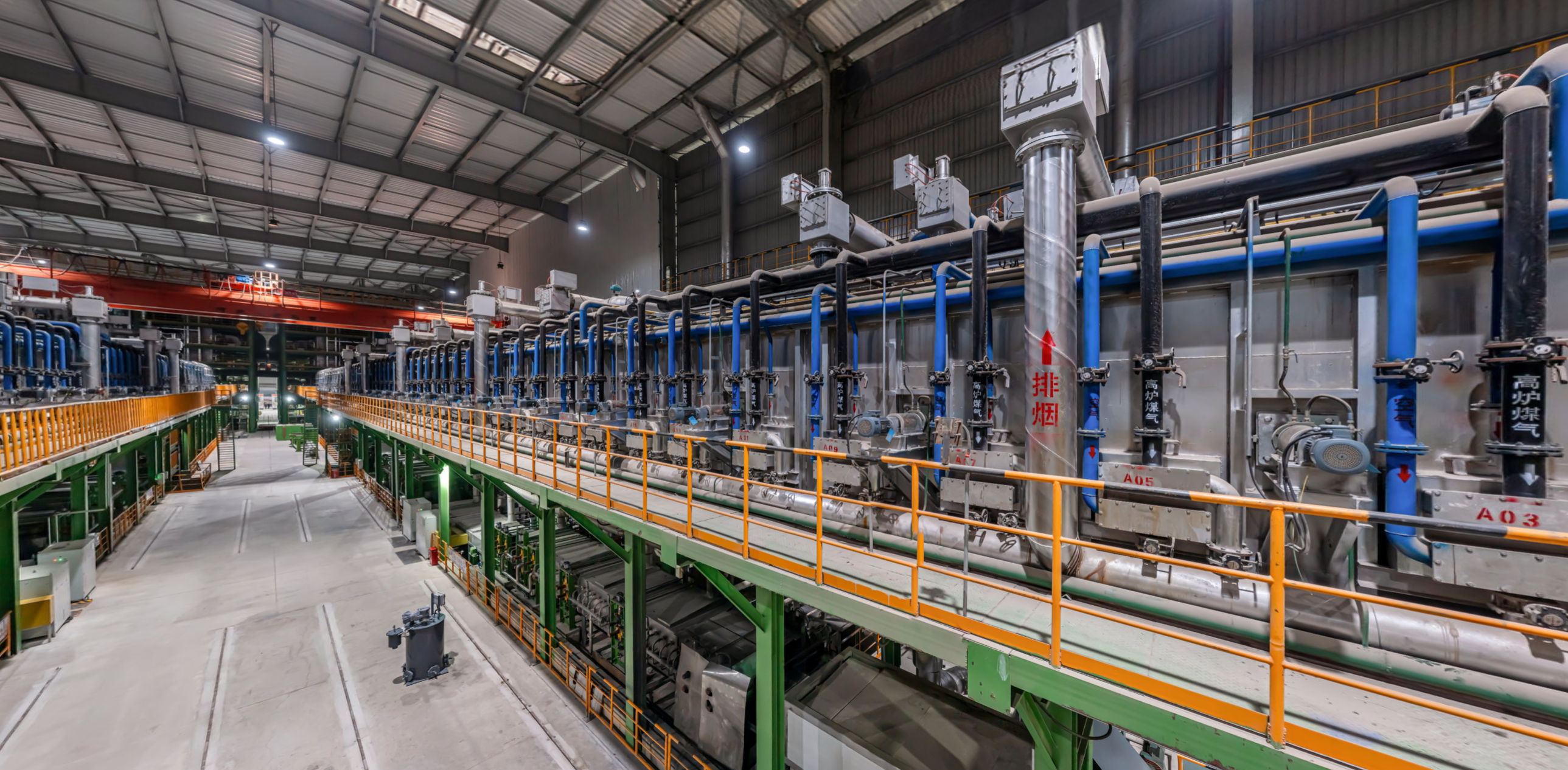
The cleaned strip is dried by hot air, then passes through a deviation correction roll into tension rolls and a tension measuring roll. The strip enters the reduction annealing furnace under centered constant tension. Inside the furnace, the strip is heated to the annealing temperature, and the oxide film on the strip surface is reduced by the hydrogen-containing atmosphere in the furnace. The strip is then rapidly cooled to the temperature required for galvanizing and enters the ceramic pot via hot tension rolls.
Hot-dip coating is performed in the pot, and the strip is turned by a sink roll and lifted vertically upward. After leaving the zinc surface, a pair of air knives installed on both sides of the strip above the zinc pot scrape off the excess coating on the surface to control the coating thickness.
After exiting the air knives, the strip continues to rise into the post-coating cooling section to solidify the coating, then turns into horizontal fans for further cooling, and turns again to descend vertically into the quenching tank. Before entering the quenching tank, the strip is cooled to below 160℃; after water cooling in the quenching tank, the strip temperature drops to below 45℃. After drying, it enters the skin pass and tension leveling area. The strip enters the skin pass mill through a set of tension rolls. The main function of the skin pass mill is to improve the mechanical properties of the strip and flatten the zinc spangles. The strip then enters the tension leveler through the tension roll set to improve the flatness through stretch leveling.
The tension-leveled strip undergoes passivation treatment using dip coating and squeezing. After passivation, the steel sheet enters the drying device, then enters the exit looper through tension rolls.
The line is equipped with an entry looper and an exit looper to ensure that the process section can maintain normal operation when the entry and exit sections stop for coil changing during line operation.